European Commission’s use of FSR in Lisbon Metro case to replace Chinese subcontractor raises concerns; CCCEU calls for due process, regulatory transparency
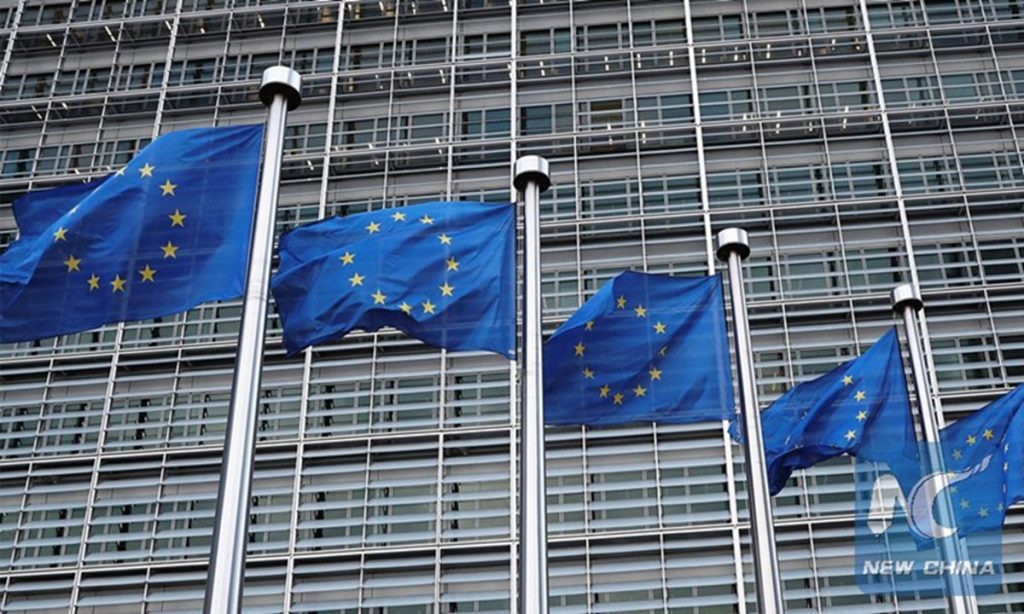
The European Commission (EC) has ordered a shake-up in a major Lisbon Metro project, forcing the replacement of a Chinese subcontractor over so-called "distortive foreign subsidies." The move, taken under the bloc's Foreign Subsidies Regulation, has drawn swift backlash from the China Chamber of Commerce to the EU, which on Tuesday voiced strong opposition and serious concern over the decision.
A Chinese company that was among those chosen to build a new Lisbon subway line benefited from "unfair foreign subsidies," the EC claimed on Tuesday, forcing consortium leader Mota-Engil to hire a Polish company instead, Reuters reported.
The Metropolitano de Lisboa, which commissioned the Violet Line, was authorized to hire the Mota-Engil-led consortium provided it replaced Chinese rolling stock manufacturer Portugal CRRC Tangshan with Polish rival PESA, the EC claimed in a statement, said the report.
In a statement the CCCEU shared with the Global Times, the chamber said that it observed that in the present case, the Chinese entity concerned participated in the bidding consortium solely as a subcontractor, with a contract value accounting for less than 10 percent of the overall contract value of the project. This is significantly below the thresholds generally considered indicative of material influence under relevant rules for subcontracting, said the chamber.
Against this background, the basis for classifying the subcontractor as "critical," as well as establishing the causal link and proportionality between such classification and the redressive measures imposed, have not been sufficiently disclosed or explained, according to the CCCEU.
Where structural remedies are triggered despite a clearly limited share in the contractual value, the necessity and legal basis of such measures require further substantiation and should be subject to a strict proportionality test, the statement said.
Furthermore, the chamber said that during the investigation, the company concerned was repeatedly granted extremely short deadlines of only two to three days to submit extensive and complex information and related documentation.
Such time constraints failed to adequately take into consideration the practical difficulties of cross-border evidence collection and multi-jurisdictional compliance challenges, and materially undermined the effective exercise of the rights of defense and impaired the due process, said the chamber.
In its current application, the FSR grants the EC excessive discretion in subsidy assessment, impact evaluation, and the selection of remedial measures. The lack of sufficiently clear, consistent, and predictable standards increases the risk of inconsistent enforcement and selective application, noted the CCCEU.
The CCCEU urged the EU side to promptly rectify relevant practices and ensure that the implementation of the FSR strictly adheres to the principles of proportionality, non-discrimination, due process, and regulatory transparency.
The EC's move against the Chinese subcontractor is being viewed as a further stretch of the definition of "foreign subsidies," raising red flags over the strength of the evidence and the transparency of the process, Wang Yiwei, director of the Center for European Union Studies at Renmin University of China, told the Global Times on Wednesday.
Such a practice uses the banner of "fair competition" to pursue a degree of protectionism, while also masking the reality of a relative decline in the industrial competitiveness of the bloc, Wang said.
The EC has been persistently using the FSR to interfere in business activities. Previously, the EC announced the launch of an in-depth investigation into a Chinese wind power company under the FSR.
In February, a spokesperson of China's Ministry of Commerce (MOFCOM) said in response to related cases that the commission has been frequently using the FSR investigative tool to target Chinese companies, including by upgrading investigations into wind power and security inspection equipment firms to in-depth probes, which shows clear targeting and discrimination. China has expressed grave concern and strong dissatisfaction over this.
The MOFCOM spokesperson said that the European side's relevant investigations broadly define "foreign subsidies," suffer from issues such as insufficient evidence to initiate cases and a lack of procedural transparency, and are a typical case of using the banner of "fair competition" to pursue "protectionism."
China urged the EU to immediately correct its wrongful practices, exercise caution in the use of unilateral investigative tools under the FSR, and work to create a fair, just, and predictable market environment for China-EU cooperation, said the spokesperson.